
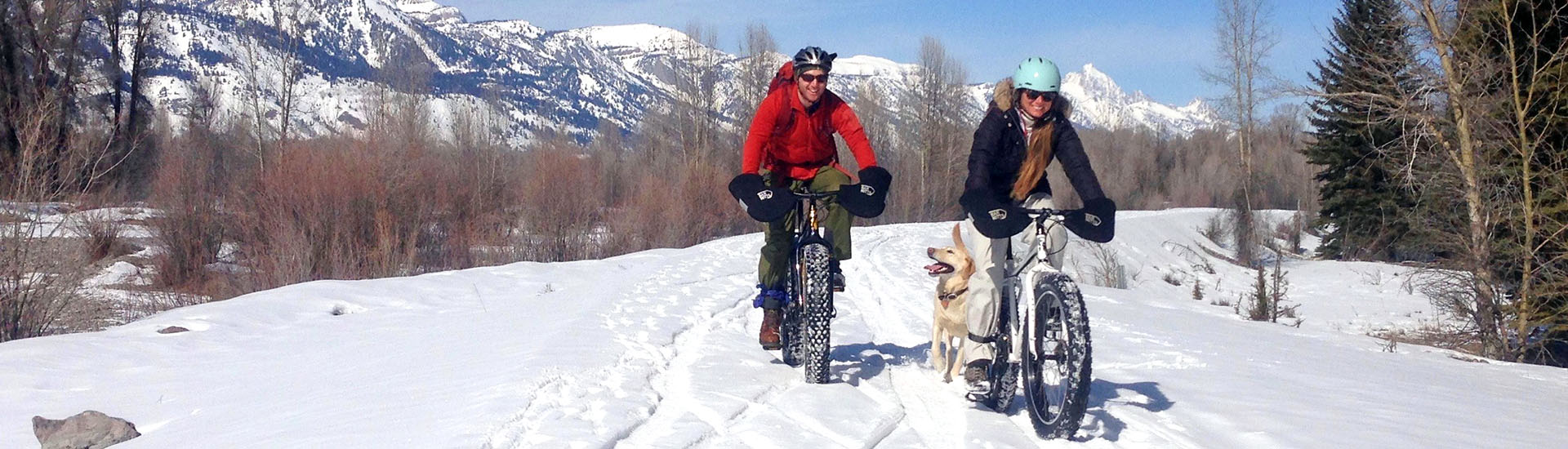
Winter Responsibly
This page covers winter trail etiquette, wildlife safety, dog policy, search & rescue procedures, and avalanche awareness for cross country skiers, fat bikers, snowshoers, and dog walkers using groomed and backcountry winter trails across Jackson Hole, Teton Valley, and Grand Teton National Park.
We love winter trails! And we hope you will too. As more people are on trails, and enjoying them more days and for different uses, there is a lot we can do to be prepared, be good stewards, and to help maximize the fun for everyone.
Fun Fact: Did you know over 210,000 users are on groomed trails each winter in Jackson Hole and Teton Valley?
Trail Etiquette for Skiers, Fat Bikers, Snowshoers and Dogs
All of the groomed tracks and many of the ungroomed winter trails in our region are multi-use: sometimes just for skate and classic skiing and often for skiers, bikers, walkers, snowshoers, dogs and occasionally snowmachines. Paying attention to which users are allowed on each trail, the flow of users on trail, and your own impacts on the snow surface, can help everybody have more fun.
Give Wildlife Space: Winter Wildlife Distance Rules
Respecting wildlife is for their safety as they balance energy inputs and outputs through the winter months, and yours. Moose and bison are really big, and can be unpredictable. And predators are often not interested in humans, but they are predators.
Give wildlife space—at least 100 yards for bears and wolves, and 25 yards for moose and other animals. Look for and comply with winter closure signs and dog leash signs near winter closures. Carrying bear spray, and knowing how to use it, is also a good idea in early and late winter.
Find Your Lane: How to Share Multi-Use Groomed Trails
Look for signs at the trail head that indicate where on the track each user-type should travel. And if there is no sign or you not sure, find a friendly face and ask.
In general, not skating, walking or dog printing on the classic tracks keeps those tracks in good shape until the next grooming. Walkers generally have a lane to one side in order to leave a wide consistent surface, without footprint divots, for skate skiing. Depending on the snow conditions and trail location, fat bikers may travel in the skate or walking lane, or they may have their own singletrack lane. If bikes are leaving ruts on multi-use trails, the snow is too soft and bikers should come enjoy the trail another day.
Share the Trail: Yielding Guidelines for Skiers, Bikers & Walkers
Watch for other users, and make space. Slow down in congested areas and be considerate of other users, whether that user is out for a workout and looking focused or out for their first ski and looking wobbly. The trails are for everyone and a little kindness goes a long way.
On most trails, bikers yield to all other users. And uphill skiers yield to downhill skiers (it is often easier to stop when you are going uphill). Yielding is more than just moving aside, and is a two-way responsibility. Slowing down, saying hi and ensuring the other user(s) can pass in a safe and friendly manner are important for both the yielder and the yieldee.
Dogs on Winter Trails: Leashes, Wildlife and Waste
Winter is a great season to enjoy time together with your dog, and for dogs to be outside running and playing. Before you head out, know whether dogs are permitted on the trail and understand any specific rules like leashes in the parking lot and or for the first several hundred feet of trail (or for the whole trail). Leash rules are generally in place for managing dogs in congested areas (i.e., managing dogs and other people and dogs) and in support of wildlife who have enough going on in the winter that preventing a dog from chasing them is good practice. Cache Creek, Teton Canyon and Emily's Pond are great dog friendly trails.
Specific to winter trails, dog waste is one of the primary sources of excess nutrients and E. coli fecal bacteria contamination through snowmelt. A recent study completed by Protect our Water Jackson Hole (POWJH) indicates up to 8,000 pounds of dog poop is created per day in Teton County, Wyoming! It also wreaks considerable havoc if another user or groomer runs over it, gets it on their gear and spreads it far and wide onto the snow surface. Please pick up dog poop, every time, and dispose of it properly in the trash.
Quick Guidelines at a Glance
- Yield: Bikers yield to all other users. Uphill skiers yield to downhill skiers.
- Wildlife: Stay 100 yards from bears and wolves; 25 yards from moose and other animals.
- Lanes: Don't skate, walk, or let dogs print on classic ski tracks. Walkers stay to one side.
- Dogs: Check each trail's rules before you go, leash where required, and pick up dog waste every time.
- Fat bikes: Stay off soft trails — if you're leaving ruts, the snow is too soft. Come back another day.
- Avalanche terrain: Some groomed tracks (Cache Creek, Mail Cabin) cross or sit below avalanche terrain. Check BTAC before you go.
- Plan ahead: Know the permits, weather, gear, map, your group's limits, and an emergency plan.
Winter Trails Safety
Plan ahead and prepare is good advice for a lot of things, including spending time on winter trails. In addition to making your outing more enjoyable, it helps you be ready in case things do not go as planned. Good things to know before you go include:
- Are there permits or fees required?
- What might you expect for conditions – road, weather, grooming, avalanche – and do you have the appropriate gear, snacks and water to manage in them?
- Where are you going and do you have a map of some kind?
- Do you know your own and your group's capabilities and potential limits?
Below are some tips and resources.
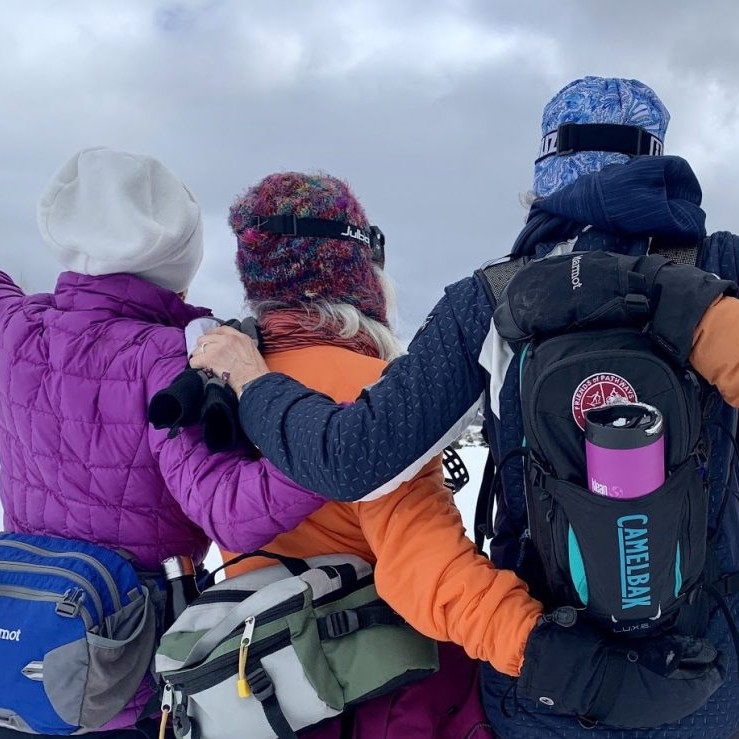
What's in Your Pack?
Plan ahead and prepare is good advice for a short lunchtime skate ski or a half-day xc adventure. Here is what long-time Nordic skiers and residents Gwenn and Don Wadsworth carry in their Nordic packs. You may want to pare down or bulk up your pack to match your different adventures, but this is an example of where to start.

How to Reach Search and Rescue
Teton County, Wyoming, Search and Rescue (TCSAR) and Teton County, Idaho, Search and Rescue (TCISAR) are available in and around the Tetons to provide emergency support if you are out on a Nordic ski, fat bike or snowshoe in the winter and unable to return to the trailhead or parking lot under your own power. To reach SAR, it’s a good idea to know before you go, think about your options and read up about the emergency communications options on your phone.
Read Who to Call in an Emergency on Nordic and Winter Trails...

Read the Avalanche Forecast
It is true that most groomed tracks stay out of avalanche terrain... but not all do. Similarly, light Nordic touring routes and gentle cross-country ski excursions can take place entirely outside of places where you are in or underneath avalanche terrain. But there are places in the Tetons, for example a section of the Cache Creek groomed track or Mail Cabin, that can be lovely cross-country skis and travel is in or below avalanche terrain. It is always your responsibility to know what terrain you are traveling through, and below, and to make appropriate route choices for the conditions of the day.
The Bridger-Teton Avalanche Center (BTAC) is our regional source for forecasts. You can find other resources, including education opportunities, there.
Winter Responsibly Videos
The Bridger-Teton National Forest's "Be a Friend of the Bridger-Teton" video series covers the core principles of wintering responsibly. While not all winter trails are on Bridger-Teton land, these principles apply everywhere:
- Plan Ahead and Prepare
- Know Before You Go (avalanche awareness)
- Leave Wildlife Alone
- Control Your Dog
- Leave No Trace
- Trail Etiquette
Winter Trail FAQ
How far should I stay from moose on Jackson Hole winter trails?
Stay at least 25 yards (75 feet) from moose and other large animals, and at least 100 yards from bears and wolves. Moose are unpredictable and can charge — give them a wide berth, especially when they're feeding or with calves. Look for and comply with winter closure signs and dog leash signs near wildlife habitat.
Can I bring my dog on Jackson Hole cross country ski trails?
It depends on the trail. Dogs are allowed on many regional trails — Cache Creek, Teton Canyon, and Emily's Pond are great dog-friendly options, along with many trails in Teton Valley. Dogs are not permitted on most Grand Teton National Park trails. Always check the specific trail rules before you go, leash where required, and pick up dog waste every time.
Who has right of way on multi-use winter trails?
On most trails, bikers yield to all other users. Uphill skiers yield to downhill skiers — it's easier to stop when traveling uphill. Yielding is more than moving aside: slow down, say hi, and make sure the other user can pass safely. Yielding is a two-way responsibility between the yielder and the yieldee.
Is it safe to cross country ski in avalanche terrain near Jackson Hole?
Most groomed Nordic tracks stay out of avalanche terrain, but not all. A section of the Cache Creek groomed track and the Mail Cabin route, for example, travel in or below avalanche terrain. It is your responsibility to know what terrain you're traveling through and to make appropriate route choices. Check the Bridger-Teton Avalanche Center forecast before heading out.
What should I carry in my Nordic ski pack?
At minimum: water, snacks, an extra layer, a headlamp, a map or GPS, a way to call for help (phone or InReach), and basic first aid. For longer or more remote outings, add fire-starting materials, repair items, and avalanche safety gear if applicable. Long-time Jackson Hole Nordic skiers Gwenn and Don Wadsworth share their full Nordic pack list on the site.
How do I reach Search and Rescue if I have an emergency on a winter trail?
Call 911. In Teton County, Wyoming, Search and Rescue (TCSAR) covers the Jackson Hole side; in Teton County, Idaho, Search and Rescue (TCISAR) covers the Teton Valley side. Loading an emergency app and knowing your GPS coordinates makes rescue significantly faster.
Why is dog waste a problem on winter trails?
Dog waste is one of the primary sources of excess nutrients and E. coli contamination in Teton County waterways through snowmelt — Protect Our Water Jackson Hole estimates up to 8,000 pounds of dog waste per day in Teton County, Wyoming. Beyond the water-quality issue, dog waste hit by groomers or skis gets spread across the snow surface and onto other users' gear. Always pack it out.
Conservation Corner
To learn more about what you can do, and what others are doing, here are a few organizations that we believe positively support winter trails, recreation and the greater Teton region.
Save Teton Pass Trail - A dual county alliance working to raise $5M to connect Teton Valley and Jackson Hole with a non-motorized pathway. Construction on the section from Trail Creek campground towards Coal Creek will being in August, 2026.
WYldlife for Tomorrow - Inspiring businesses that benefit from tourism and recreation to invest in conservation of Wyoming's wildlife. Keep it WYld.
Protect Our Water Jackson Hole - Restoring Teton County's vital water resources through advocacy, education and solutions. Specific to winter trails, dog waste is one of the primary sources of excess nutrients and E. coli fecal bacteria contamination through snowmelt. Please pick up dog poop, every time, and dispose of it properly in the trash.
Leave No Trace - protecting the outdoors through science-based education that inspires responsible recreation. Together, we turn everyday visitors into lifelong stewards of the natural world. The trail etiquette tips above are derived from the seven LNT principles: plan ahead and prepare, travel and camp on durable surfaces, dispose of waste properly, leave what you find, minimize campfire impacts, respect wildlife, be considerate of others.
Teton Conservation District - updates and hosts the Interagency Winter Wildlife Closures Map covering the Bridger-Teton and Caribou Targhee National Forests, Grand Teton National Park, Teton County, Wyoming and adjacent lands.
Page last updated: June 2026.